
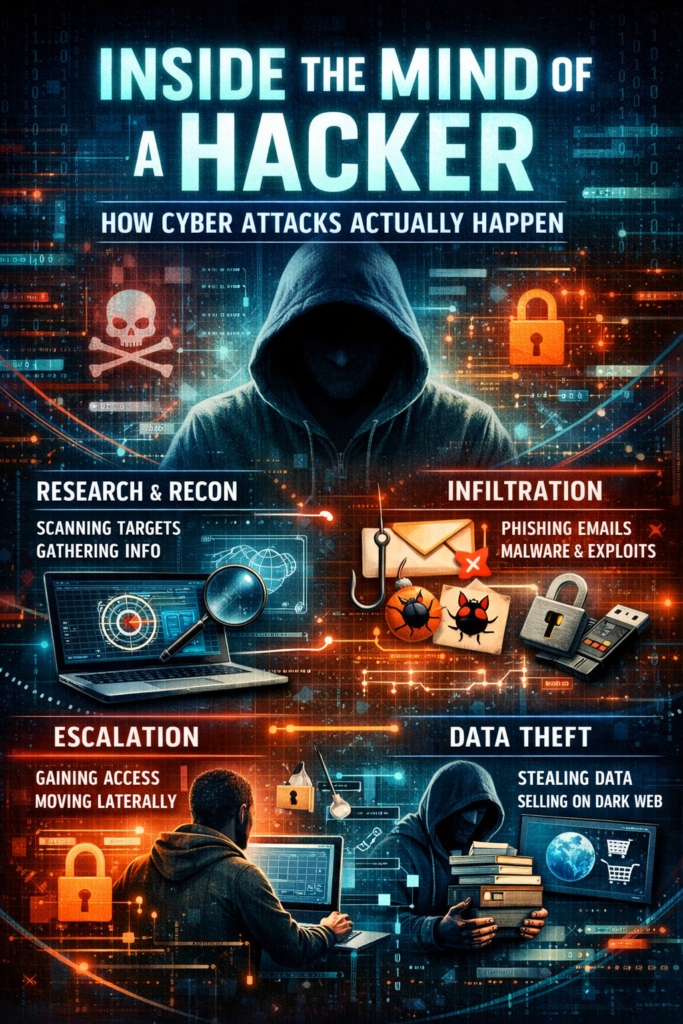
Inside the Mind of a Hacker: How Cyber Attacks Actually Happen. When a cyber attack makes headlines, most people imagine a hooded figure furiously typing code in a dark room. The reality is far less dramatic — and far more calculated. Hackers follow a structured, repeatable process. They are patient, observant, and methodical. Understanding how they think is not just fascinating — it is the foundation of building strong cyber defenses.
The Hacker Mindset
The biggest misconception about hackers is that they rely on luck or brute force. They don’t. Before a single attack tool is launched, a hacker has already spent hours – sometimes days – simply watching and learning. They study their target the way a chess player studies an opponent. Every detail matters, and nothing is dismissed as too small.
This mindset is what makes skilled hackers so effective. They are not just technically capable – they are strategic thinkers who exploit human behavior just as often as they exploit software vulnerabilities.
How cyber attacks happen It Starts With Information
Everything begins with information gathering. A hacker’s first goal is to build a complete picture of the target. This includes publicly available data – company websites, employee LinkedIn profiles, email formats, and technology stacks. Even a job listing that mentions specific software can tell a hacker exactly what systems are running inside an organization.
This phase is largely invisible. No alarms go off, no systems are touched. It is pure observation – and that is exactly what makes it dangerous. By the time a defender realizes something is wrong, the attacker already knows more about the network than most employees do.
Finding the Weak Points in how cyber attacks happen
Once enough information is collected, the hacker begins looking for vulnerabilities. These are the cracks in the wall – outdated software that hasn’t been patched, servers left with default credentials, open ports that should have been closed, and misconfigured security settings that nobody noticed.
This is where most attacks are actually won or lost. A well-maintained, properly patched system is significantly harder to breach. But the truth is, most organizations have at least a few overlooked vulnerabilities. Hackers know this, and they are willing to be patient until they find one.
The Moment of Exploitation
When a vulnerability is identified, the hacker moves to exploit it. This could take many forms – a phishing email designed to steal login credentials, a malicious script injected into a web form, or a known software flaw that gives unauthorized access to a system.
What is important to understand here is that exploitation is rarely a dramatic moment. In most real-world attacks, access is gained quietly, without any visible disruption. The system keeps running. Users keep working. Nobody notices anything unusual – and that is exactly the point.
Staying Hidden, Staying In Control
Gaining access is only the beginning. Once inside, a hacker’s priority shifts to staying there without being detected. This is done by installing backdoors for persistent access, creating hidden administrator accounts, and carefully erasing or modifying log files that could reveal their presence.
From this position, an attacker can move quietly through the network, accessing sensitive files, monitoring communications, and escalating privileges over time. Some attackers remain undetected for weeks or even months – silently extracting data or waiting for the right moment to cause damage.
What This Means for Defenders
Understanding how hackers operate changes the way you think about security. Every phase of an attack is also an opportunity to stop it. Reducing your organization’s public information footprint limits what an attacker can learn. Regularly patching systems closes the vulnerabilities they look for. Monitoring logs and network activity helps detect unusual behavior before it becomes a serious breach.
Cybersecurity is not just about having the right tools – it is about thinking ahead. The best defenders are the ones who understand the attacker’s perspective and use that knowledge to build smarter, stronger defenses.
The hacker’s greatest advantage is that most people underestimate them. The moment you stop doing that, you become a much harder target.
Understanding how cyber attacks actually happen is essential for anyone entering cyber security. Many beginners ignore this step, but knowing how cyber attacks actually happen helps you think like a hacker and identify vulnerabilities more effectively. When you clearly understand how cyber attacks actually happen, you can build stronger defense strategies and protect systems from real-world threats. This knowledge not only improves your practical skills but also prepares you for real job roles in cyber security.
Do hackers always target big companies and organizations?
Not necessarily. Hackers often target small businesses and individuals because they tend to have weaker security. Big companies are not the only ones at risk – anyone with valuable data, weak passwords, or outdated software can become a target.
How long does a cyber attack take?
It varies. Some attacks happen in minutes, while advanced ones can take weeks – hackers are extremely patient.