
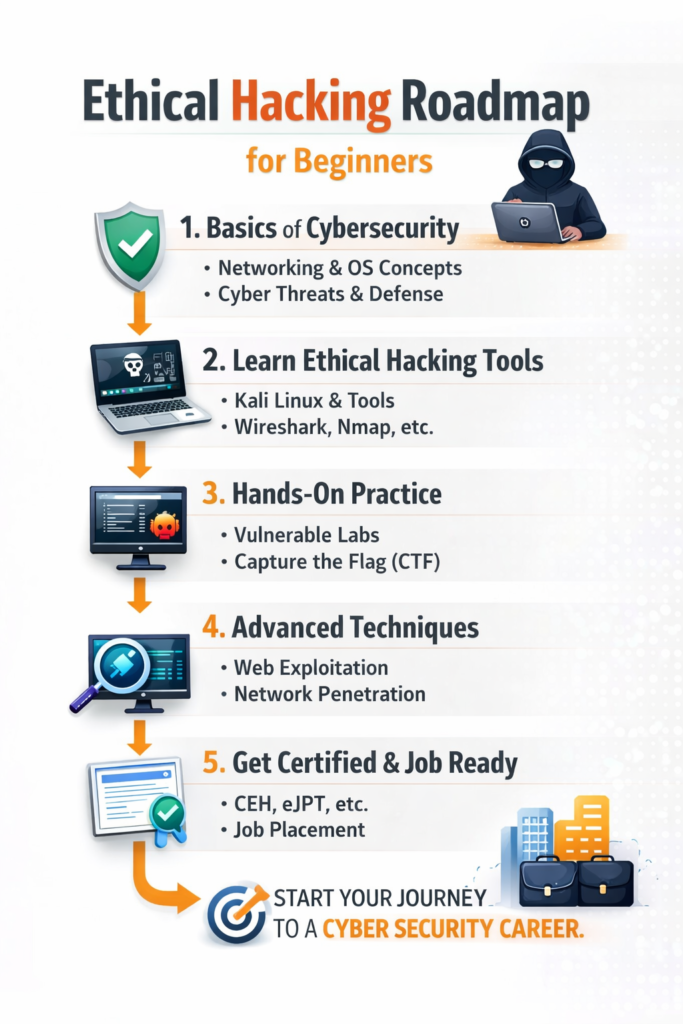
Introduction to Ethical Hacking Roadmap for Beginners
Cybersecurity is one of the fastest-growing fields in the world today. As more businesses move online, the risk of cyberattacks increases every day. This has created a massive demand for skilled professionals who can protect systems and data. Ethical hacking is a great way to enter this field and build a rewarding career.
Ethical hacking means legally testing systems, networks, and applications to find security weaknesses before malicious hackers can exploit them. Ethical hackers, also called penetration testers or white-hat hackers, work with the permission of organizations to improve their security. It is a responsible and high-value role in the cybersecurity industry.
Many beginners are choosing this field because of its high salaries, global job opportunities, and the exciting nature of the work. However, without a clear plan, it is easy to feel lost. Having a roadmap helps you learn the right skills in the right order and avoid wasting time on unnecessary topics. For more knowledge visit our website.
Step-by-Step Ethical Hacking Roadmap for Beginners
Following a structured path is the most effective way to become an ethical hacker. Here is the step-by-step ethical hacking roadmap for beginners that you should follow.
Learn Networking Basics
Networking is the foundation of ethical hacking. You need to understand how devices communicate with each other over the internet. Start by learning core concepts like IP addresses, DNS (Domain Name System), and HTTP/HTTPS protocols. Understanding how data travels across networks will help you identify where vulnerabilities can exist. Resources like Professor Messer’s free networking courses or the CompTIA Network+ study material are great starting points.
Understand Operating Systems
Most ethical hacking is performed using Linux, so learning Linux basics is essential. Get comfortable with the command line, file permissions, and common Linux tools. At the same time, learn Windows fundamentals because most corporate environments run on Windows. Understanding both operating systems gives you the ability to work in any real-world scenario. Kali Linux is the most popular distribution used by ethical hackers and is free to download and practice with.
Learn Cybersecurity Fundamentals
Before using any hacking tools, you must understand the basic security concepts and types of attacks that exist. Learn about common attacks like phishing, SQL injection, cross-site scripting, and man-in-the-middle attacks. Study the CIA triad — Confidentiality, Integrity, and Availability — which is the core principle behind all cybersecurity work. This knowledge helps you think like both an attacker and a defender.
Practice with Tools
Once you have the fundamentals, start practicing with industry-standard tools in a safe lab environment. Nmap is used for network scanning and discovering open ports. Wireshark helps you analyze network traffic and understand what data is being sent across a network. Burp Suite is the go-to tool for web application security testing. Set up a home lab using VirtualBox with vulnerable machines like Metasploitable to practice safely without breaking any laws.
Certifications in Ethical Hacking Roadmap for Beginners
Certifications prove your skills to employers and significantly improve your chances of getting hired. The ethical hacking roadmap for beginners includes certifications at two levels.
Entry-Level Certifications
The eJPT (eLearnSecurity Junior Penetration Tester) is one of the best beginner certifications. It is fully practical, affordable, and designed specifically for people new to penetration testing. CompTIA Security+ is another excellent entry-level certification that is widely recognized by employers across industries. Both of these will validate your foundational knowledge and get your foot in the door.
Advanced Certifications
Once you have experience and confidence, pursue the CEH (Certified Ethical Hacker) issued by EC-Council. It is one of the most recognized certifications in the industry. The OSCP (Offensive Security Certified Professional) is the gold standard for penetration testers. It involves a 24-hour hands-on exam where you must hack into multiple machines. Earning OSCP opens doors to senior-level roles and significantly higher salaries.
Career Opportunities After Ethical Hacking Roadmap for Beginners
Completing this roadmap prepares you for several exciting career paths. As a Penetration Tester,you will be hired by companies to legally hack their systems and report vulnerabilities. A Security Analyst monitors networks and responds to incidents in real time to keep organizations safe. Bug Bounty Hunters work independently, finding vulnerabilities in company programs and earning cash rewards. All three roles are in high demand and offer remote work opportunities.
Final Thoughts on Ethical Hacking Roadmap for Beginners
The ethical hacking roadmap for beginners is not about learning everything at once. It is about building a strong foundation, practicing consistently, and moving forward one step at a time. Consistency matters more than speed. Even 30 to 60 minutes of focused practice every day will produce real results within months.
Cybersecurity is a field that never stops evolving, so you must commit to continuous learning throughout your career. New vulnerabilities, tools, and attack techniques emerge regularly. Following blogs, joining communities like Hack The Box or TryHackMe, and staying updated with security news will keep your skills sharp.
The future of ethical hacking is extremely bright. As long as technology exists, there will be threats — and a need for skilled people to stop them. Start today, follow this roadmap, and you will be well on your way to a successful cybersecurity career. To Understand from basics visit this page.